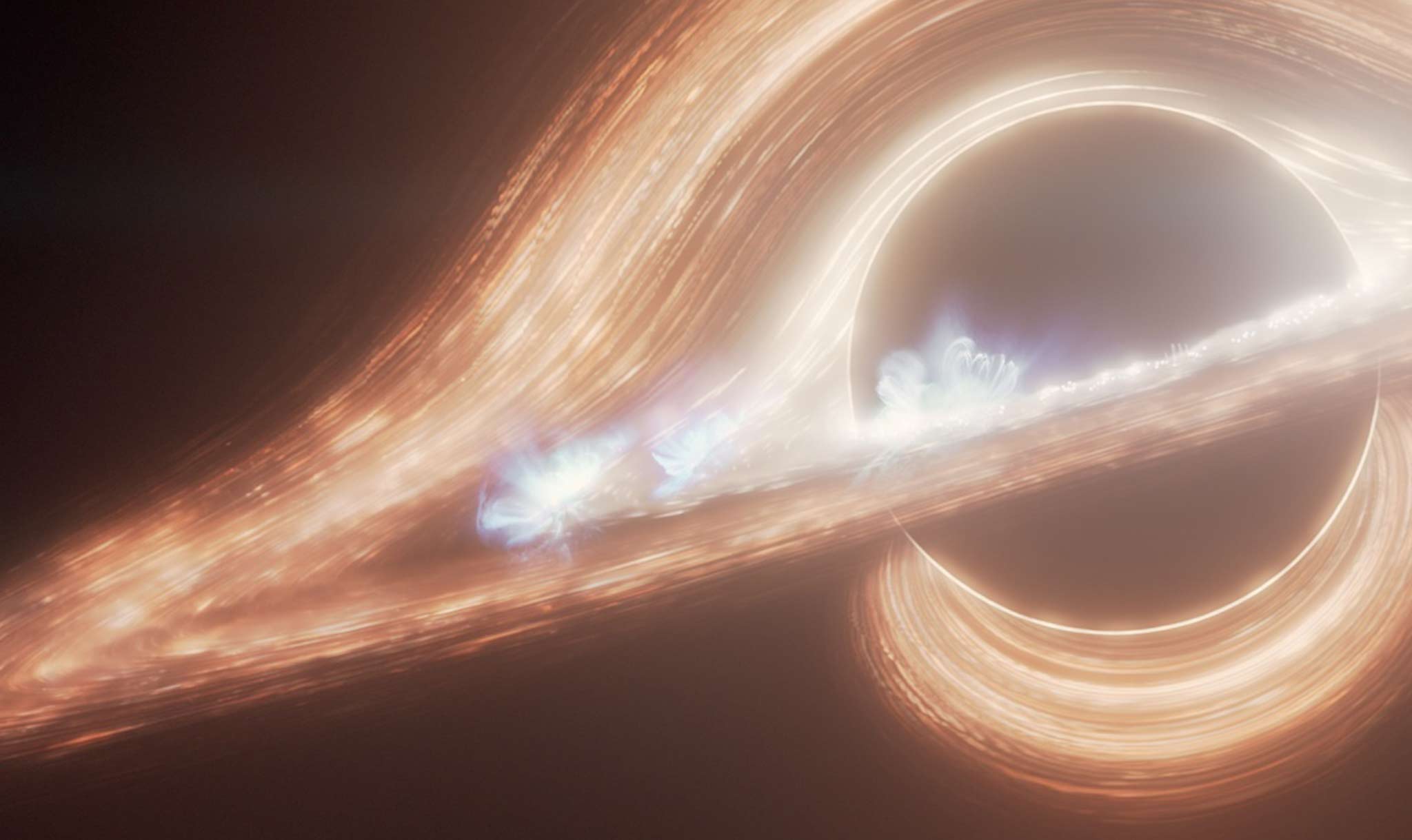
An artist’s idea of what a black hole flare looks like

Fireworks From a Black Hole!

A black hole in the middle of the Milky Way is always shooting out light.

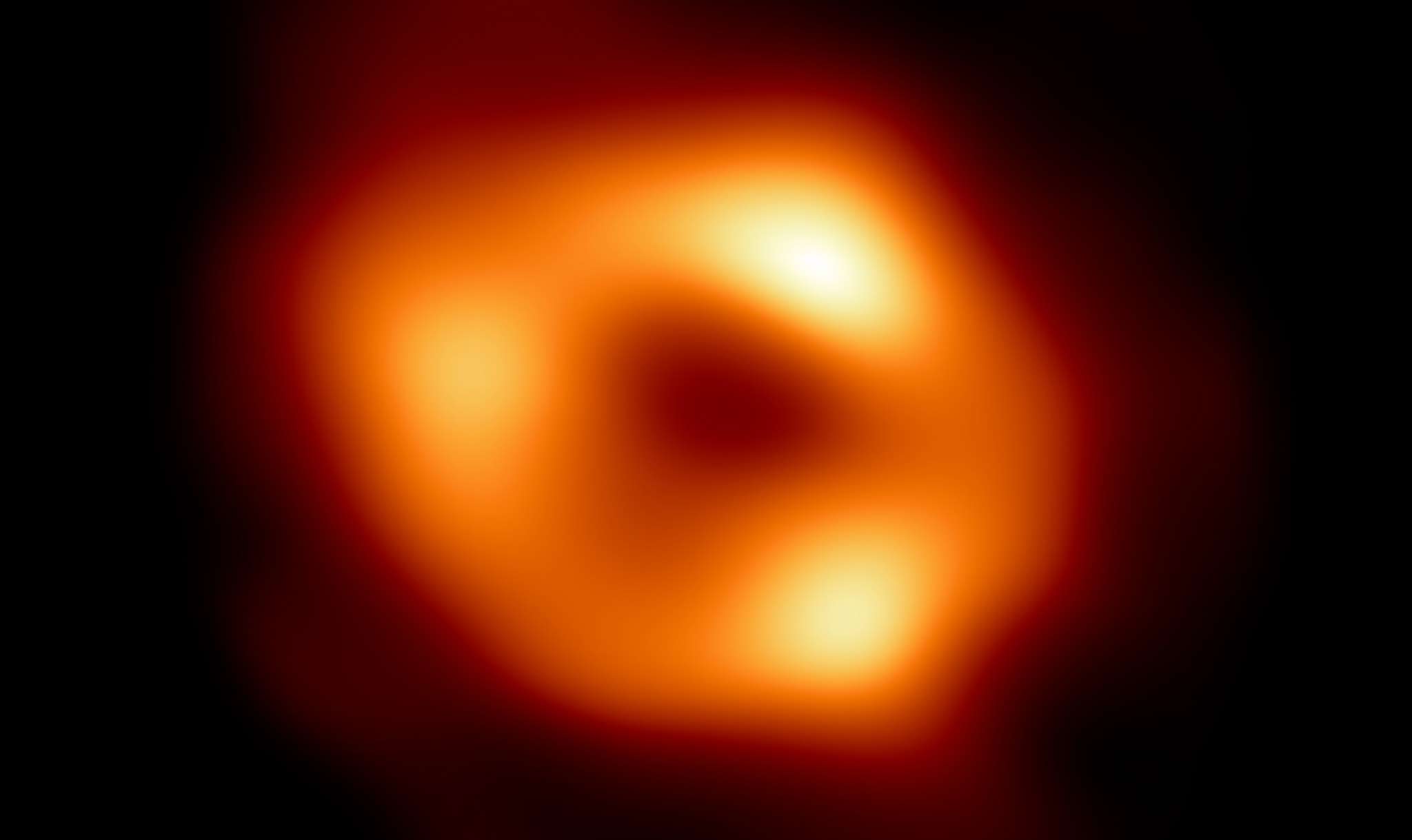
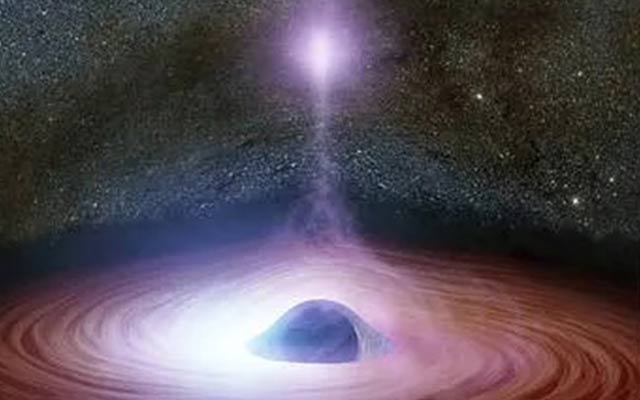
Our galaxy is called the Milky Way. At the center of our galaxy, more than 26,000 light-years away from us, is a giant black hole. Its name is Sagittarius A*. A recent report showed that this black hole is full of energy — and it’s shooting out light like a big fireworks show!

Flares of light from the black hole come in all sizes. Some flares are quick little flickers, while others are huge and bright and light up the surrounding space nearby. The black hole never rests and seems to always be sending out flares.

Farhad Yusef-Zadeh is a scientist at Northwestern University in Evanston, Illinois. He’s the lead author of the report, which was published on February 18. “Flares are expected to happen in essentially all black holes,” Yusef-Zadeh said, “but our black hole is .”

Scientists used NASA’s James Webb Space Telescope (JWST) to zoom in on the action. That unmanned craft launched in late 2021 — and ever since, the JWST has been flying through space, peering deep into the universe. “We the black hole multiple times throughout 2023 and 2024,” Yusef-Zadeh explained. “We noticed changes in every observation,” he said. “Nothing ever stayed the same.”

Yusef-Zadeh and his team got their data from a camera called NIRCam, which is aboard the JWST. The team watched Sagittarius A* for a total of 48 hours over the year, in 8- to 10-hour sections. The black hole would make about five to six big flares every day, along with several smaller ones in between.

“In our data, we saw constantly changing, bubbling brightness,” Yusef-Zadeh explained. “And then boom! A big burst of brightness suddenly popped up. Then, it calmed down again. We couldn’t find a pattern in this activity. It appears to be random.”

So, what’s causing all these flares? The black hole has a spinning disk of gas and dust around it called an “accretion disk.” The light shows happen as the black hole interacts with the materials in the disk.

Scientists hope to keep watching Sagittarius A* for longer periods of time. Yusef-Zadeh has submitted a proposal to the team behind the JWST — hoping to use the spacecraft to observe the black hole for 24 straight hours!

“When you are looking at such weak flaring events, you have to compete with ,” Yusef-Zadeh said. “If we can observe for 24 hours, then we can reduce the noise to see features that we were unable to see before,” the scientist explained. “That would be amazing,” he added. The team hopes to find out if the flares repeat on a schedule or if they are truly random.

Black holes may be dark inside. But reports like these show that the future of space study is bright!

By Ryan Cramer
Updated February 25, 2025, 5:00 P.M. (ET)
Fireworks From a Black Hole!

A black hole in the middle of the Milky Way is always shooting out light.

An artist’s idea of what a black hole flare looks like

Our galaxy is called the Milky Way. At the center of our galaxy, more than 26,000 light-years away from us, is a giant black hole. Its name is Sagittarius A*. A recent report showed that this black hole is full of energy — and it’s shooting out light like a big fireworks show!

Flares of light from the black hole come in all sizes. Some flares are quick little flickers, while others are huge and bright and light up the surrounding space nearby. The black hole never rests and seems to always be sending out flares.

Farhad Yusef-Zadeh is a scientist at Northwestern University in Evanston, Illinois. He’s the lead author of the report, which was published on February 18. “Flares are expected to happen in essentially all black holes,” Yusef-Zadeh said, “but our black hole is .”

Scientists used NASA’s James Webb Space Telescope (JWST) to zoom in on the action. That unmanned craft launched in late 2021 — and ever since, the JWST has been flying through space, peering deep into the universe. “We the black hole multiple times throughout 2023 and 2024,” Yusef-Zadeh explained. “We noticed changes in every observation,” he said. “Nothing ever stayed the same.”

Yusef-Zadeh and his team got their data from a camera called NIRCam, which is aboard the JWST. The team watched Sagittarius A* for a total of 48 hours over the year, in 8- to 10-hour sections. The black hole would make about five to six big flares every day, along with several smaller ones in between.

“In our data, we saw constantly changing, bubbling brightness,” Yusef-Zadeh explained. “And then boom! A big burst of brightness suddenly popped up. Then, it calmed down again. We couldn’t find a pattern in this activity. It appears to be random.”

So, what’s causing all these flares? The black hole has a spinning disk of gas and dust around it called an “accretion disk.” The light shows happen as the black hole interacts with the materials in the disk.

Scientists hope to keep watching Sagittarius A* for longer periods of time. Yusef-Zadeh has submitted a proposal to the team behind the JWST — hoping to use the spacecraft to observe the black hole for 24 straight hours!

“When you are looking at such weak flaring events, you have to compete with ,” Yusef-Zadeh said. “If we can observe for 24 hours, then we can reduce the noise to see features that we were unable to see before,” the scientist explained. “That would be amazing,” he added. The team hopes to find out if the flares repeat on a schedule or if they are truly random.

Black holes may be dark inside. But reports like these show that the future of space study is bright!

By Ryan Cramer
Updated February 25, 2025, 5:00 P.M. (ET)

Draw it AskRuss